
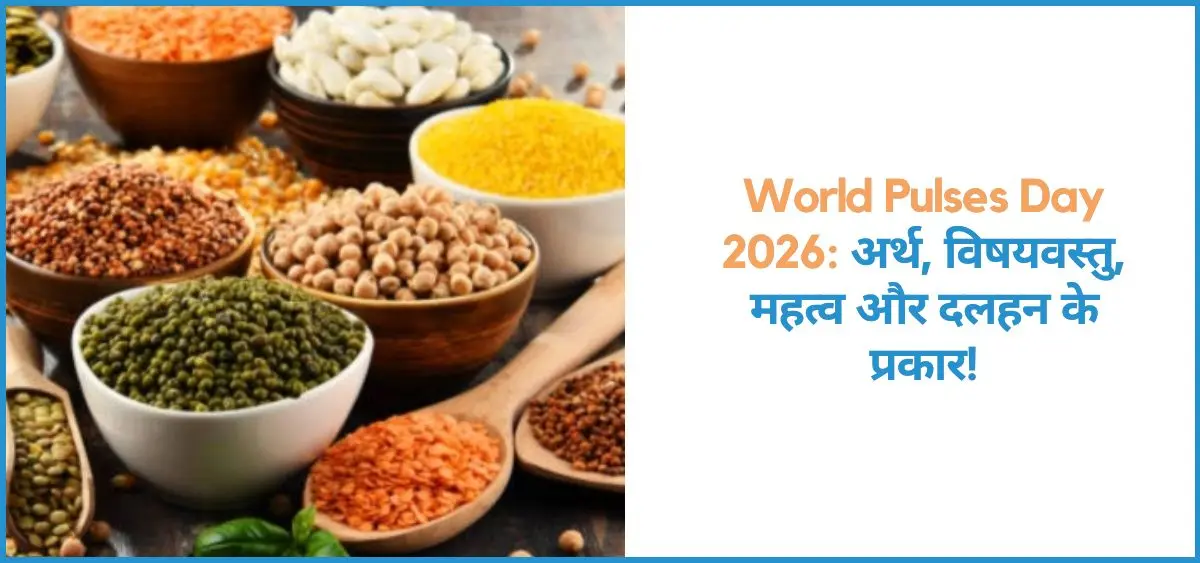
World Pulses Day: Meaning, Theme, Significance, and Types of Pulses! | World Pulses Day 2026
Greetings, readers! Today, we are going to discuss an important topic: “World Pulses Day.” This day is celebrated every year on February 10th, and its main objective is to spread awareness about the importance of pulses worldwide. Pulses, as we know them, are an integral part of our diet. They are not only rich in nutrients but also beneficial for the environment. In this blog, we will discuss in detail the meaning, theme, significance, and various types of pulses for World Pulses Day. We will explain the provided information in simple language so that everyone can understand it easily.
World Pulses Day is an international day established by the Food and Agriculture Organization (FAO) of the United Nations. It was instituted to highlight the importance of pulses (like pigeon peas, lentils, chickpeas, peas, etc.) as a global food source. It has been celebrated annually on February 10th since 2019. Every year on this day, the dried, edible seeds of pulse plants are celebrated. This day also aims to promote the numerous health benefits of pulses.

You might know about legumes or leguminous plants, but how much do you know about pulses? Pulses are edible seeds that fall into the superfoods category. Chickpeas, lentils, dried peas, and beans are all different varieties of pulses. Pulses are actually part of the leguminous plant family. Leguminous plants are those that grow in pods, while pulses are the dried, edible seeds found inside the pods. The specific health benefits of pulses distinguish them from legumes. Pulses are high in dietary fiber and are an excellent low-fat source of protein. Micronutrients like iron, potassium, magnesium, zinc, and B vitamins are found in pulses.
Meaning of World Pulses Day
To understand the meaning of World Pulses Day in simple terms, it is a day that spreads the importance of pulses worldwide. Pulses are the dried, edible seeds of leguminous plants harvested for food. They are rich in protein, fiber, vitamins, and minerals and are an essential part of diets worldwide. In a simple definition, pulses are dried seeds of leguminous plants used as food, such as lentils, beans, chickpeas, and peas.
World Pulses Day is celebrated every year on February 10th, recognized by the United Nations General Assembly in 2019 to raise awareness about the importance, nutrition, and role of pulses in sustainable agriculture. This day provides a unique opportunity to raise public awareness about pulses and highlight their fundamental role in transforming more efficient, inclusive, resilient, and sustainable agri-food systems, ensuring better production, better nutrition, better environment, and a better life, leaving no one behind.
With the help of governments, the private sector, member and partner organizations, the public, and youth, FAO works to facilitate the observance of this international day and support the production and consumption of pulses as part of sustainable food systems and healthy diets. The meaning of this day is also to celebrate pulses as food for people, soil, and the planet. In simple terms, this day reminds us that even small seeds can bring about big change. Pulses nourish people, protect the environment, and promote sustainable agriculture.
Theme of World Pulses Day
The theme of World Pulses Day changes every year, focusing on different aspects of pulses. For example, the theme for 2025 is “Pulses: Diversifying Agri-Food Systems.” These protein-rich crops are crucial for improving soil health and ensuring food security. Whereas the slogan for 2025 is “Love Pulses for Healthy Diets and a Healthy Planet.”
Now, let’s talk about 2026. The theme for World Pulses Day 2026 is “Pulses of the World: From Modesty to Excellence.” This theme highlights the remarkable journey of pulses—from simple, traditional crops to globally recognized superfoods that promote nutrition, sustainability, and food security. It emphasizes how simple, nutrient-rich seeds like lentils, chickpeas, beans, and peas have become essential components of modern, sustainable diets worldwide.
The key focus areas of the World Pulses Day 2026 theme are as follows:
- From Humble Beginnings to Global Impact: This theme illustrates how pulses, once considered basic food items, now play a central role in culinary innovation, healthy diets, and climate-friendly agriculture.
- Global Collaboration: The main global event for World Pulses Day 2026 is being held in collaboration with the Kingdom of Spain at the Miguel Delibes Cultural Center in Valladolid, highlighting international cooperation in building sustainable agri-food systems.
- Confluence of Science and Food Culture: The 2026 celebration combines scientific discussions with culinary demonstrations, encouraging the integration of pulses into everyday meals in creative, nutritious, and sustainable ways.
- Support for the UN’s 2030 Agenda: Pulses are recognized for improving soil fertility, biodiversity, and ecosystem health, while also providing affordable nutrition—directly supporting the UN’s 2030 Sustainable Development Goals.
Overall, World Pulses Day 2026 encourages people, communities, and governments to increase the production and consumption of pulses to protect both human health and the planet’s health. The theme’s main focus is on the diversity of pulses, their health benefits, and their role in sustainable development.
History of World Pulses Day
The history of World Pulses Day is quite interesting. The Food and Agriculture Organization (FAO) of the United Nations declared 2016 as the International Year of Pulses. In December 2018, the United Nations General Assembly designated February 10th as World Pulses Day. The first World Pulses Day was celebrated on February 10, 2019. This important food day is linked to the UN’s 2030 Agenda for Sustainable Development.
Building on the success of the International Year of Pulses (IYP) implemented by FAO in 2016 and recognizing the potential of pulses in further achieving the 2030 Agenda for Sustainable Development, the United Nations General Assembly (UNGA) designated February 10th as World Pulses Day (WPD). This was decided by the 73rd session of the UNGA on December 20, 2018, to be observed annually on February 10th starting from 2019. The purpose of this date is to draw attention to activities and information related to the pulses sector globally.
World Pulses Day also seeks to maintain the momentum gained during the FAO’s declaration of 2016 as the International Year of Pulses. Following the success of the ‘International Year of Pulses’ in 2016 by the UN’s Food and Agriculture Organization (FAO), it was announced to be celebrated annually on February 10th. World Pulses Day was established after the global success of the International Year of Pulses (2016).
When is World Pulses Day 2026? World Pulses Day is a global event dedicated to recognizing the importance of pulses as a vital food source for nutrition, sustainable agriculture, and environmental protection. Celebrated annually on February 10th, this day highlights how pulses contribute to food security, healthy diets, soil fertility, and resilience to climate change. This international day is officially recognized by the United Nations and supported by the Food and Agriculture Organization (FAO).
When is World Pulses Day celebrated? World Pulses Day is celebrated every year on February 10th. It has been celebrated annually since 2019, after being designated by the United Nations General Assembly (UNGA) in December 2018.
Objective and Significance of World Pulses Day
The main objective of World Pulses Day is to highlight the nutritional benefits of pulses (such as chickpeas, pigeon peas, peas, lentils) and their role in sustainable food production. World Pulses Day provides an opportunity to raise awareness about the nutritional benefits of pulses as part of targeted sustainable food production towards food security and nutrition. This official designation is also linked to the UN’s 2030 Agenda for Sustainable Development, a comprehensive set of universal and transformative Sustainable Development Goals aimed at strengthening universal peace.
Why is World Pulses Day celebrated? Recognizing the long-term importance of pulses, the United Nations declared February 10th as World Pulses Day to:
- Promote nutrition and healthy diets
- Encourage sustainable food systems
- Support farmers and rural livelihoods
- Reduce hunger and malnutrition
- Improve soil health and biodiversity
Key Facts and Significance of World Pulses Day:
- Objective: To highlight the nutritional benefits of pulses and their role in sustainable food production.
- History: Declared following the success of the ‘International Year of Pulses’ in 2016 by FAO.
- 2025 Theme/Slogan: “Pulses: Diversifying Agri-Food Systems” and “Love Pulses for Healthy Diets and a Healthy Planet.”
- Nutrition: Pulses are an excellent source of protein, fiber, vitamins, and minerals, helping to reduce non-communicable diseases (like diabetes, obesity).
- Environmental and Economic Benefits: These crops increase soil fertility by adding nitrogen to the soil and grow with less water. They are an affordable and sustainable source of income for farmers.
- India’s Contribution: India is the largest producer and consumer of pulses in the world.
The significance of this day lies in its guiding us towards better health, environment, and economy through pulses. Pulse crops are often called “climate-smart crops” because they grow with less water and enrich the soil.
Types of Pulses
There are various types of pulses used worldwide. The main types of pulses consumed globally are:
- Lentils: Rich in iron and protein, such as Masoor Dal (lentils, moong, toor).
- Chickpeas: Rich in fiber and plant protein.
- Dry Beans: Kidney beans, black beans, navy beans.
- Dried Peas: Yellow and green peas.
- Lupins: High in protein and resistant to climate change.
Examples of Pulses:
- Chickpeas
- Lentils (Masoor, Moong, Toor)
- Dry Beans (Kidney beans, Black beans)
- Dried Peas
- Lupins
These food items are affordable, nutritious, and widely consumed across various cultures. Each type of pulse supports both human health and sustainable agriculture. For instance, chickpeas are rich in fiber, aiding digestion, while lentils provide iron, which prevents anemia.
Health Benefits of Pulses
The health benefits of pulses are numerous. Pulses are high in dietary fiber and are an excellent low-fat source of protein. Micronutrients like iron, potassium, magnesium, zinc, and B vitamins are found in pulses.
Other health benefits include:
- Helpful in preventing and controlling diabetes
- Reduces the risk of heart disease
- Lowers the risk of certain types of cancer
- Lowers cholesterol levels
- Aids in weight management
Importance of Pulses in Nutrition: Pulses are considered nutrient-rich foods.
- High in plant-based protein.
- Rich source of dietary fiber
- Low in fat
- Helps in regulating blood sugar and cholesterol
- Beneficial for heart health and weight management
This is why pulses are ideal for children, students, adults, and the elderly. If you don’t eat pulses, you can start. To gain all the health benefits of pulses, just half a cup of pulses a day is sufficient. Before eating pulses, you can soak them for 4 to 8 hours. This will reduce the phytate content and also decrease the chances of gas formation. Soaking makes them easily digestible. Moreover, soaking allows the body to absorb nutrients better.
Environmental and Economic Benefits of Pulses
The environmental benefits of pulses are very significant. Pulses play a crucial role in sustainable agriculture.
- Fix atmospheric nitrogen into the soil
- Improve soil fertility and biodiversity
- Require less water compared to many crops.
- Reduce carbon footprint
- Support climate-resilient farming
These crops increase soil fertility by enhancing nitrogen content and grow with minimal water. For farmers, they are an affordable and sustainable source of income.
Role of Pulses in Sustainable Development
World Pulses Day is closely linked to the UN’s 2030 Sustainable Development Goals (SDGs), particularly:
- Zero Hunger
- Good Health and Well-being
- Climate Action
- Responsible Consumption
- Poverty Reduction
Including pulses in diets helps provide sustainable food for more people. This celebration provides a unique opportunity to raise public awareness about pulses and highlight their fundamental role in transforming more efficient, inclusive, resilient, and sustainable agri-food systems.
World Pulses Day in India and Contribution of Pulses
India is the largest producer and consumer of pulses in the world. India is:
- One of the largest producers and consumers of pulses
- A major contributor to global pulse cultivation
- Home to diverse varieties of pulses grown in various states
World Pulses Day encourages Indian farmers to adopt crop rotation and intercropping with pulses to improve productivity and income. According to News18 Hindi, India is the world’s largest producer and consumer of pulses.
How to Celebrate World Pulses Day?
How to celebrate #WorldPulsesDay? Many food organizations organize special events to promote this day. Food enthusiasts worldwide publish recipes for pulses on their websites. Restaurants prepare special dishes made from pulses. To participate:
- Learn more about pulses.
- Organize a dinner featuring various dishes made from pulses.
- Gather with friends or family and see who can name the most types of pulses.
- Prepare your own dish made from pulses.
- Search the internet for delicious pulse recipes.
- Share this day on social media with hashtags like #WorldPulsesDay or #LovePulses.
World Pulses Day 2026 Theme – Key Focus Areas
The theme for World Pulses Day 2026 is “Pulses of the World: From Modesty to Excellence.” This theme was announced by FAO (Food and Agriculture Organization) on January 30, 2026. This theme highlights the remarkable journey of pulses—from simple, traditional crops to globally recognized superfoods. Pulses have now become key pillars of nutrition, sustainability, and food security.
Key Focus Areas
This theme focuses on the following main points:
- From Modesty to Global Impact: Pulses (like lentils, chickpeas, beans, peas, etc.) were once considered basic food, but they are now playing a central role in culinary innovation, healthy diets, and climate-friendly agriculture. This theme highlights their journey from humble origins to global excellence.
- Excellence in Nutrition and Health: Pulses are rich in protein, fiber, vitamins, and minerals. The theme celebrates their nutritional properties against challenging perceptions, such as considering them merely simple, while they are superfoods that aid in combating diabetes, heart disease, and malnutrition.
- Taste, Diversity, and Culinary Arts: The theme emphasizes the delicious qualities, nutritional value, and culinary diversity of pulses. They have now become an integral part of modern cuisine.
- Global Collaboration and Events: The main celebration for 2026 was held at the Miguel Delibes Cultural Center in Valladolid, Spain, showcasing international cooperation. It was a confluence of scientific discussions and culinary demonstrations, encouraging the incorporation of pulses into meals in creative, nutritious, and sustainable ways.
- Support for Sustainable Development Goals: The theme is linked to the UN’s 2030 Agenda—improving soil fertility, biodiversity, climate adaptation, and providing affordable nutrition. It calls for increasing pulse production and consumption to protect human health and the planet.
FAQs: World Pulses Day
1. What is World Pulses Day?
World Pulses Day is an international day celebrated every year on February 10th. Its purpose is to raise public awareness about the contribution of pulses to nutrition, food security, and sustainable agriculture.
2. When is World Pulses Day celebrated?
World Pulses Day is celebrated annually on February 10th.
3. Why is World Pulses Day important?
This day highlights the promotion of healthy diets, improvement of soil fertility, combating the effects of climate change, and the crucial role of pulses in sustainable food systems.
4. What are pulses?
Pulses are dried and edible seeds of leguminous plants, such as lentils, chickpeas, beans, and peas, which are used as food.
5. What are some key examples of pulses?
Common examples of pulses include lentils, chickpeas, dry beans, dried peas, and lupins.
6. How are pulses beneficial for the environment?
Pulses improve soil fertility, help reduce carbon emissions, and require less water, making them environmentally friendly and sustainable crops.
7. What is the slogan for World Pulses Day?
World Pulses Day provides an opportunity to celebrate the importance of these vital crops globally since 2019.
The theme for the year 2025 is – “Pulses: Diversifying Agri-Food Systems” and the slogan is – “Love Pulses for Healthy Diets and a Healthy Planet.”
8. What are the names of 10 major pulses?
Pulses are a major source of protein in the plant kingdom. Their examples include peas, chickpeas, lentils, kidney beans, urad dal, kulthi, moong, arhar, cowpeas, and peas. Various types of dals are derived from these.
9. What is the main pulse in India?
In India, chickpeas, arhar, kulthi, urad, and green moong are the major pulses, widely cultivated in various states.
10. Which state is first in pulse production in the year 2025?
Madhya Pradesh is the largest pulse-producing state in India, contributing over 25 percent to the country’s total pulse production.
11. What are the main pulse crops in India?
More than a dozen pulse crops are cultivated in India, with major ones including chickpeas, moong, arhar (toor), urad, and lentils.
Key Takeaways and Conclusion of World Pulses Day
Key takeaways from World Pulses Day:
- Recognized by the United Nations
- Celebrated globally on February 10th
- Supported by FAO
- Promotes nutrition, sustainability, and food security
- Educates people about the meaning, types, and benefits of pulses.
World Pulses Day – Main Conclusion: World Pulses Day reminds us that even small seeds can bring about big change. Pulses nourish people, protect the environment, and promote sustainable agriculture. By increasing awareness and consumption of pulses, the world moves towards a healthier and more sustainable future.
Related Articles:–