
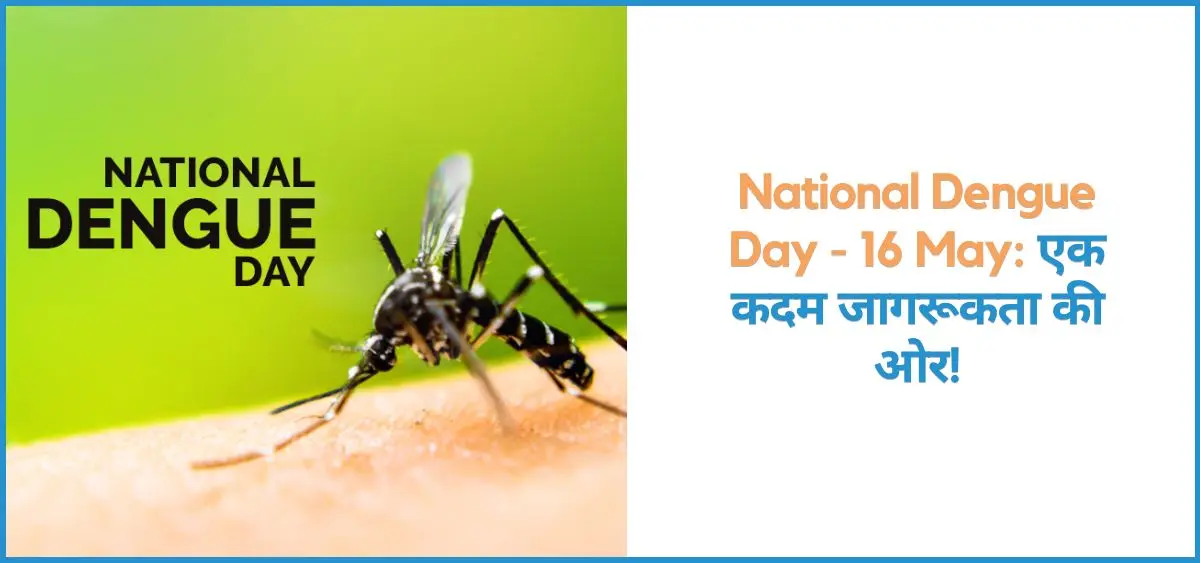
National Dengue Day: A Step Towards Awareness, Prevention, and Safe Living! | National Dengue Day – 16 May
Dengue fever is a severe viral infection spread by mosquitoes. It is particularly prevalent in tropical and subtropical regions, and India is no exception. Many parts of the country see an annual increase in dengue cases, making it a significant public health concern. To address this threat, National Dengue Day is observed every year on May 16th, to raise public awareness about the disease and encourage the adoption of preventive measures.

What is Dengue and How Does it Spread?
Dengue is a viral disease primarily spread by Aedes species mosquitoes. These mosquitoes breed in clean, stagnant water and are most active during the day. When an infected mosquito bites a person and then bites a healthy person, the virus spreads.
Dengue infection can spread rapidly, especially in areas with inadequate drainage systems and standing water. While the disease is often mild, in some cases, it can take a severe form known as Dengue Hemorrhagic Fever or Dengue Shock Syndrome.
Dengue Situation in India (2020-2025)
Dengue has remained a challenge in India for many years. Between 2020 and 2025, cases have shown continuous fluctuations, but an overall upward trend has emerged. Dengue cases have particularly surged in urban areas.
Several factors contribute to this increase:
- Monsoon Season: During rains, water accumulates in various places, creating ideal breeding grounds for mosquitoes.
- Urbanization: Rapidly growing cities, coupled with unplanned construction and poor waste management, increase opportunities for mosquito breeding.
- Poor Drainage: Stagnant water is a primary cause of dengue spread.
The mosquito population peaks in the post-monsoon period, further increasing the risk of infection. This is why vigilance becomes even more crucial during this time.
Why is National Dengue Day Celebrated?
National Dengue Day, observed every year on May 16th, is dedicated to raising public awareness about dengue. Its objective is not just to provide information but also to actively motivate people to prevent this disease.
The main objectives of this day are:
- To inform people about the causes and symptoms of dengue.
- To encourage the elimination of mosquito breeding sites.
- To emphasize the importance of timely treatment.
- To promote community participation.
This day reminds us that with a little precaution, we can protect ourselves and our families from this serious disease.
Dengue in a Global Perspective
Dengue is spreading rapidly not only in India but also in many other countries worldwide. Globally, there has been a significant increase in its cases over the past few years.
- Approximately 500,000 cases were reported in 2000.
- By 2019, this number had increased to over 5.2 million.
However, experts believe that the actual number could be even higher, as many cases have mild symptoms or go unreported.
Countries affected by dengue include Brazil, Philippines, Vietnam, Kenya, and many others, in addition to India. These figures indicate that dengue has become a global health challenge.
Key Symptoms of Dengue
Dengue symptoms can sometimes resemble common fever or malaria, but certain signs distinguish it. Timely identification is crucial.
Key symptoms include:
- High fever
- Headache and pain behind the eyes
- Sore throat
- Chills
- Extreme fatigue
- Severe muscle and joint pain
- Vomiting and nausea
- Red rashes on the body
- Bleeding from gums, nose, or other areas
- Decrease in platelet count
An important point is that sometimes the fever suddenly drops, leading the patient to believe they are recovering. However, this situation can actually be more dangerous. Therefore, such signs should not be ignored.
Preventive Measures Against Dengue
There is no specific cure for dengue, so prevention is the most effective approach. This disease can be prevented by adopting some simple measures.
1. Do Not Allow Water to Accumulate
Mosquitoes breed in clean water, so:
- Do not let water collect in pots, buckets, and tires.
- Regularly clean coolers and water tanks.
- Maintain cleanliness in your surroundings.
2. Use Mosquito Repellents
- Apply mosquito repellent creams or sprays.
- Use electric mosquito repellents.
- Use mosquito nets.
3. Keep Your Body Covered
- Wear long-sleeved clothing.
- Keep children especially safe.
4. Make Your Home Safe
- Install screens on windows and doors.
- Keep doors closed.
5. Community Efforts
- Raise awareness among neighbors.
- Participate in community clean-up drives.
Steps Taken by the Government
The Government of India has undertaken several significant initiatives for dengue prevention. These efforts are helping to control the disease at a national level.
- Fogging and Spraying: Insecticides are sprayed in affected areas to eliminate mosquitoes.
- Public Awareness Campaigns: People are educated about dengue through TV, radio, and social media.
- Research and Development: Continuous research is being conducted to find dengue vaccines and better treatments.
- International Cooperation: Better strategies are being developed in collaboration with global health organizations.
Role of Health Experts
The role of doctors and health experts is crucial in combating dengue. They not only provide timely treatment but also educate people with correct information.
- Timely testing and diagnosis
- Treatment in severe cases
- Educating patients
- Preventing complications
Seeking medical help at the right time can prevent the severe effects of dengue.
Community Responsibility
The fight against dengue is not solely the responsibility of the government or doctors; every citizen’s participation is essential.
- Keep your home and surroundings clean.
- Do not allow water to accumulate.
- Educate others as well.
- Get tested immediately if symptoms of the disease appear.
Only when the entire community works together can this disease be controlled.
FAQs: National Dengue Day – 16 May
1. When is National Dengue Day celebrated in India?
National Dengue Day is celebrated every year on May 16th in India.
2. What causes dengue?
Dengue is a viral disease spread by the bite of female mosquitoes of the Aedes species, particularly Aedes aegypti and Aedes albopictus. The mosquito spreads the virus after feeding on the blood of an infected person.
3. What was the old name for dengue?
Dengue was previously known by different names, but over time, it gained widespread recognition as “Dengue.” Chikungunya is a distinct virus, often confused with dengue.
4. Where are dengue mosquitoes most commonly found?
These mosquitoes are found indoors and in shady areas nearby, such as near beds, furniture, and stagnant water in pots. Their numbers are higher in urban areas.
5. When and where was the first case of dengue found in India?
The first case of dengue in India was reported in Kolkata in 1945-46, while the first epidemic occurred in 1963-64.
6. How far back does the history of dengue go?
The earliest documented outbreak of dengue dates back to 1779, and its virus and spread were understood in the 20th century.
7. Is a complete cure for dengue possible?
There is no specific medication for dengue, but with timely treatment and care, patients can fully recover.
8. What is the dengue season in India?
In India, dengue cases typically surge during and after the monsoon season, i.e., between July and November.
9. What is the difference between dengue types (DENV-1, 2, 3, 4)?
There are four types of dengue virus. Among these, DENV-2 and DENV-3 can often cause more severe infections.
10. What does 4S mean in dengue?
4S stands for:
- Search and destroy mosquito breeding sites.
- Keep your body covered.
- Adopt mosquito repellent measures.
- Contact a doctor immediately if symptoms appear.
11. What kind of water does dengue spread in?
Dengue-spreading mosquitoes breed in clean and stagnant water, such as in pots, coolers, tires, and water-filled containers.
Conclusion: National Dengue Day – 16 May
National Dengue Day is not just a date; it’s an awareness campaign that conveys the message of staying safe. To prevent diseases like dengue, we must remain vigilant and adopt small measures.
The threat of dengue is real, but it can be prevented with correct information and caution. Cleanliness, awareness, and timely treatment—these three things help us most in protecting ourselves from this disease.
This National Dengue Day, let us pledge to not only keep ourselves safe but also to raise awareness among those around us. Because a healthy society is the foundation of a strong nation.
Related Articles:–