
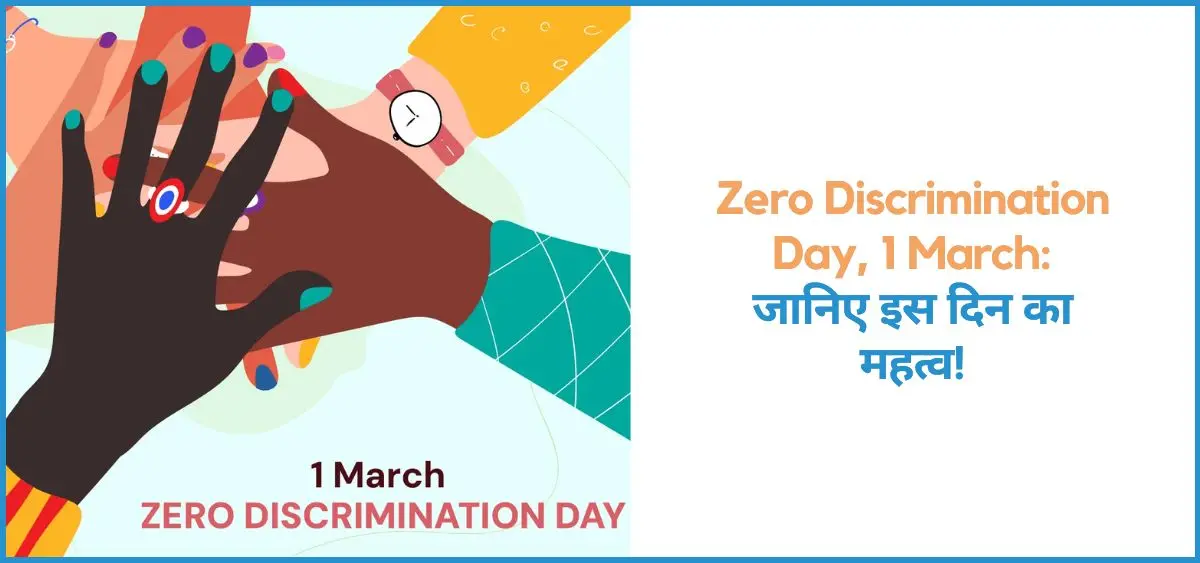
Zero Discrimination Day: A Global Call for Equality, Respect, and Rights! | Zero Discrimination Day, 1 March
Every individual dreams of living a life with dignity, respect, and equal opportunities. However, in many parts of the world today, people still face discrimination based on income, gender, caste, religion, health status, sexual orientation, or social identity. To end this inequality and spread the message of equality, Zero Discrimination Day is celebrated every year on March 1. This day is an important occasion celebrated globally by the United Nations and other international organizations, aiming to promote equality before the law and fair treatment in society.

Origin of Zero Discrimination Day
Zero Discrimination Day was first celebrated on March 1, 2014. Its formal launch took place on February 27, 2014, at a special event in Beijing, led by Michel Sidibé, then Executive Director of the Joint United Nations Programme on HIV/AIDS (UNAIDS). The initiative aimed to send a clear message to the world: discrimination in any form is unacceptable, and every individual is entitled to equal rights, respect, and opportunities.
In its initial phase, the day’s primary focus was on highlighting discrimination faced by people living with HIV/AIDS. At that time, it was observed that millions of people faced social exclusion, humiliation, and denial of health services due to the stigma associated with HIV. Gradually, the scope of this day expanded, and today it has become a global movement against all forms of discrimination related to health, education, employment, social identity, and human dignity.
Celebrated every year on March 1, this day is a celebration of the right of all people to live a dignified and meaningful life. Currently, UNAIDS is particularly focusing on people living with or at risk of HIV, as they continue to face persistent discrimination. This discrimination hinders their access to health services, violates their rights, and obstructs the goal of ending AIDS by 2030.
Data based on over 30,000 people living with HIV in 25 countries shows that stigma and discrimination remain serious problems today. According to the global report “Stigma Index 2.0 for People Living with HIV,” approximately one-quarter of people have experienced discrimination in various settings, including health centers. Additionally, 85% of people struggle with internal stigma, leading them to hide their status or discontinue treatment. These facts clearly indicate that HIV-related discrimination remains a major challenge in the path to ending AIDS by 2030.
Objectives and Significance
Celebrated every year on March 1, this day emphasizes the need to end inequalities related to income, gender, age, disability, health status, occupation, sexual orientation, gender identity, race, class, ethnicity, and religion.
States have a moral and legal obligation to repeal all discriminatory laws that harm any community or individual. Additionally, they should enact laws that protect people from discrimination.
It is not only the responsibility of governments but also of every individual in society to speak out against inequality, demand accountability, and contribute to efforts for change.
HIV/AIDS and Discrimination
Zero Discrimination Day is particularly emphasized by organizations working for the rights of people living with HIV/AIDS. HIV-related stigma and discrimination are prevalent in almost every part of the world.
In many countries, including Liberia, people living with HIV face social exclusion, humiliation, and denial of opportunities. Similarly, HIV-infected individuals associated with the LGBTI community face double discrimination. In 2017, the United Nations Development Programme (UNDP) paid tribute to LGBTI people affected by HIV/AIDS and called for the protection of their rights.
Significance of Zero Discrimination Day in India
This day holds special significance in India as well. Social activists and campaigners have used this occasion to protest against discriminatory laws targeting the LGBTI community. Specifically, Section 377 of the Indian Penal Code, which previously criminalized homosexuality, remained a symbol of discrimination for a long time.
Through this day, the message was conveyed to society that no one can be considered criminal or inferior based on their sexual identity or gender expression. The protection of equality and human rights is the foundation of a just society.
The 2015 ‘Die-In’ Initiative
In 2015, the Armenian American community in California organized a ‘die-in’ on Zero Discrimination Day to commemorate the victims of the Armenian Genocide. This event symbolized that solidarity against discrimination and violence is essential, and by learning from the mistakes of history, the future can be made better.
Zero Discrimination Day 2025: “We Stand Together”
The message of Zero Discrimination Day 2025 is — “We Stand Together.” This message underscores the importance of community-led health services and organizations.
Community health service and support providers often face challenges such as stigma, discrimination, criminalization, lack of funding, and political opposition. Despite this, they play a crucial role in ensuring that health services reach those in need, especially those in the most vulnerable segments of society.
In recent years, financial crises, particularly changes in US government funding, have posed serious challenges for many community organizations. The future of many life-saving programs related to HIV prevention, treatment, and care is at risk.
Need for Community Leadership
The goal of ending AIDS as a public health threat by 2030 is only possible if community-led initiatives receive adequate support and resources.
Often, community organizations are overlooked or do not receive adequate resources. In some places, they even face attacks. Actions against the human rights of civil society and marginalized communities disrupt HIV prevention and treatment services.
If these barriers are removed, community-based organizations can accelerate the fight against AIDS.
Key Demands and Commitments
On the occasion of Zero Discrimination Day, countries, donors, and partners are urged to ensure the following:
- Community-led organizations can provide life-saving services without discrimination or harassment.
- They receive legal registration and sustainable funding.
- Assistance is provided to deliver health services to vulnerable and marginalized groups.
- Communities are involved in monitoring and protecting human rights.
- Participation of community representatives is ensured in the development and implementation of health programs.
Global Efforts and the 10-10-10 Targets
Countries have committed that by 2025, less than 10 percent of countries will have punitive laws that affect the HIV response. Many countries have taken steps towards repealing harmful laws and implementing empowering ones.
The European Union region and other partner countries have initiated policy reforms to remove social barriers, stigma, and discrimination. 29 countries have joined the global partnership to support these reforms.
Inspirational Messages
UNAIDS Executive Director Winnie Byanyima has stated that sustainable development goals can only be achieved by upholding everyone’s rights.
According to UNAIDS Deputy Executive Director Christine Stegling, the only way to end AIDS is to work with communities, as they can reach the most marginalized people.
Symbol and Public Participation
The symbol of Zero Discrimination Day is the butterfly. The butterfly is considered a symbol of transformation, hope, and freedom. On this day, people use the butterfly symbol to share their stories and pictures to promote positive change.
On social media, people join this campaign and raise their voices against discrimination through hashtags like #March1, #ZeroDiscriminationDay, and #ZeroDiscrimination.
Why Do We Celebrate This Day?
On March 1, we pledge that every individual has the right to live a life free from discrimination, with dignity and fullness. While it began with HIV awareness, this day has now become a global platform to end all forms of discrimination.
This day reminds us that protecting health and protecting rights are interconnected. Until every individual’s rights are secured, building a safe, fair, and happy world will not be possible.
What Needs to Change? Essential Steps Towards Zero Discrimination
The goal of zero discrimination is not just an ideal, but demands concrete policy and social changes.
- Firstly, discriminatory laws must be removed. Many countries have laws that criminalize people living with HIV or communities at risk of HIV—such as sex workers, people who use drugs, individuals in same-sex relationships, or those who do not disclose their HIV status. Such punitive laws hinder access to health services and promote stigma. Therefore, governments should review their policies and reform them with a human rights-based approach.
- Secondly, protecting the right to access healthcare is crucial. Steps such as guaranteeing confidentiality, sensitivity training for healthcare workers, a zero-tolerance policy for discrimination, and ending mandatory HIV testing are essential. Every individual should receive quality and compassionate care.
- Thirdly, stigma and misconceptions prevalent in communities must be addressed. Challenging myths about HIV, promoting scientific facts like “U=U” (Undetectable = Untransmittable), and running empathy-based awareness campaigns are extremely important.
- Fourthly, strengthening community-led initiatives is necessary. Providing financial support, participation in policy decisions, and empowering peer support networks for organizations run by people living with HIV is the need of the hour.
On March 1, 2026, UNAIDS calls on governments, healthcare providers, employers, and society to listen to the voices of people affected by HIV and take evidence-based steps so that no one feels inferior due to their HIV status.
Zero Discrimination Day 2026: Theme and Message
On the occasion of Zero Discrimination Day 2026, UNAIDS calls upon people, organizations, and governments worldwide to unite and protect equality and human rights. This year’s main message is—to sustain achievements made so far, stand strong with communities, and widely share accurate facts.
UNAIDS appeals to all to ensure adequate funding for efforts related to HIV and human rights. Stigma-free behavior should be institutionalized in health systems, educational institutions, and workplaces. Additionally, discriminatory laws and policies should be reformed and eliminated, and community leadership and legal protection should be strengthened.
Furthermore, providing support and funding to community-led organizations is crucial, as they provide reliable and discrimination-free services. It is also important to spread the message through social media, schools, and workplaces that HIV is not a moral failing but a health condition, and people living with HIV can also lead healthy, dignified, and long lives.
Conclusion: Zero Discrimination Day, 1 March
Zero Discrimination Day is not just a date, but a movement—for equality, respect, and human rights. This day reminds us that discrimination in any form is unacceptable, and societal progress is only possible when every individual receives equal opportunities and dignity.
If we truly want to end AIDS by 2030 and achieve the Sustainable Development Goals, we must work by placing communities at the center. Let us all, on March 1 and throughout the year, pledge to stand against discrimination and build a society where every individual feels free, safe, and respected.
Related Articles:–