
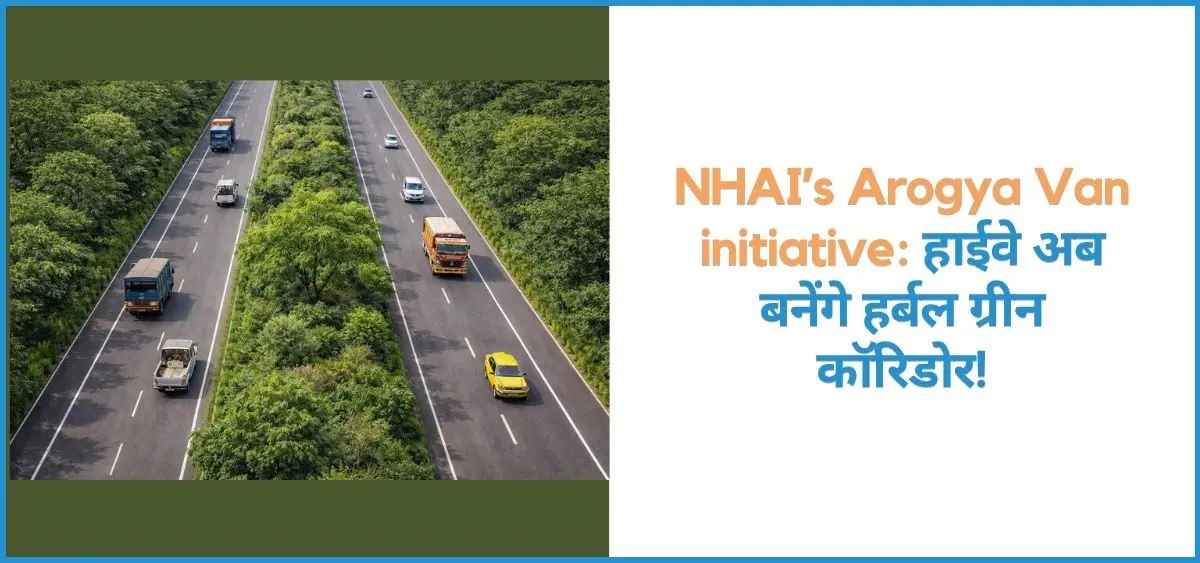
What is NHAI’s Arogya Van Initiative? NHAI Launches Arogya Van to Boost Biodiversity! | NHAI’s Arogya Van initiative
Maintaining ecological balance has become a significant challenge amidst India’s rapidly expanding road infrastructure network. Addressing this, the National Highways Authority of India (NHAI) has launched the “Arogya Van” initiative (NHAI’s Arogya Van initiative). This initiative aims to develop green and eco-friendly corridors along national highways through medicinal plant plantations. This article explains the Arogya Van initiative in detail, covering its concept, objectives, implementation, benefits, and future prospects.

What is the Arogya Van Initiative?
Arogya Van is an innovative initiative under which medicinal plants are being planted on vacant or unused land along national highways. This is not merely an effort to increase greenery but a step that promotes environmental conservation, biodiversity, and traditional medicinal systems. The initiative aims to transform highways into “green corridors” that will help maintain ecological balance.
Concept of the Arogya Van Initiative
The core concept of Arogya Van is based on theme-based plantation. Small, vacant plots along highways are developed with medicinal trees. This plantation is carried out systematically, ensuring each area serves an ecological purpose. In this way, these locations transform into mini green zones, stabilizing and enriching the environment.
- Initiative: Arogya Van (Medicinal Plantation along National Highways)
- Announced by: National Highways Authority of India (NHAI)
- Objectives: Enhance biodiversity, promote environmental sustainability, support Ayurveda
- Key Focus: Creating green corridors through theme-based plantation of medicinal trees
- States Involved: Madhya Pradesh, Haryana, Delhi-NCR, Andhra Pradesh, Gujarat, Karnataka, Odisha, Tamil Nadu, Rajasthan, Maharashtra, Chhattisgarh
- Medicinal Species: 36 species (e.g., Neem, Amla, Jamun, Tamarind, Lemon, Gular, Maulsri) – selection based on agro-climatic conditions
- Ecological Benefits: Support for pollinators, birds, microorganisms, and conservation of local medicinal flora
Key Objectives of the Arogya Van Initiative
The Arogya Van initiative has several important objectives:
- Enhance Biodiversity: Enriching the ecosystem through various medicinal species
- Promote Environmental Sustainability: Reducing air pollution and increasing green cover
- Support Ayurveda: Promoting traditional medicinal plants
- Support Wildlife: Creating a favorable environment for birds, pollinators, and microorganisms
- Strengthen Ecosystems: Maintaining ecological balance
Key Plantation Locations under the Arogya Van Initiative
- Toll Plazas
- Interchanges
- Cloverleaf Junctions
- Entry and Exit Points
- Roadside Amenities
- Highway Medians and Edges
These locations were previously underutilized but are now being transformed into green zones.
Phase One: Strategic Land Utilization
In the first phase of the Arogya Van initiative, NHAI has identified 17 plots, covering a total area of approximately 62.8 hectares.
These areas are located in the following states:
- Madhya Pradesh
- Haryana
- Delhi-NCR
- Andhra Pradesh
- Gujarat
- Karnataka
- Odisha
- Tamil Nadu
- Rajasthan
- Maharashtra
- Chhattisgarh
In this phase, over 67,000 plants are being planted. The objective is to develop maximum green cover without additional land acquisition.
Selection of Medicinal Plants
Under this initiative, approximately 36 types of medicinal plants have been selected.
Key Plants
- Neem
- Amla
- Jamun
- Tamarind
- Lemon
- Gular
- Maulsri
- Arjun (in some areas)
Selection Criteria
- Adaptability to local climate
- Low maintenance requirements
- Medicinal properties
- Environmental benefits
Social Impact under the Arogya Van Initiative
- Raise Awareness: People gain knowledge about medicinal plants.
- Educational Use: Students and researchers can study these areas.
- Community Participation: Local communities can be involved in maintenance.
Economic Impact
- Development of Surrounding Areas: Arogya Van increases greenery along highways, leading to the overall development of nearby areas. These regions become more attractive and promote investment.
- Increase in Real Estate Value: Due to a green and clean environment, demand for residential and commercial properties near highways increases, leading to a rise in their prices.
- Promotion of Tourism and Eco-tourism: Green corridors developed with medicinal plants can attract travelers. This increases opportunities for eco-tourism and benefits the local economy.
- Employment Opportunities: Local employment opportunities are generated for planting, maintenance, and monitoring, increasing income in rural and surrounding areas.
- Corporate Investment and CSR: Companies can invest in these projects as part of their CSR activities, increasing financial resources and enabling project expansion.
- Reduction in Healthcare Costs: Improved air quality and a green environment positively impact people’s health, potentially leading to a long-term reduction in healthcare expenses.
- Promotion of Local Products: Industries related to the conservation and use of medicinal plants receive encouragement, expanding the market for Ayurveda and herbal products.
- Support for Sustainable Development: Utilizing vacant land yields both economic and environmental benefits, ensuring better resource utilization.
Future Plans
NHAI has planned to plant trees on 188 hectares of additional land in the future.
Potential Development
- The number of plants could exceed 2 lakh
- Expansion to more states
- New phases will commence during monsoon
Significance of the Arogya Van Initiative
The Arogya Van initiative is not merely a plantation drive; it’s a comprehensive step connected to environment, health, and sustainable development. Its significance can be understood at multiple levels:
- Environmental Significance: This initiative strengthens biodiversity by increasing greenery along highways. Trees reduce air pollution, absorb carbon dioxide, and help maintain ecological balance.
- Promotion of Health & Ayurveda: The planting of medicinal plants supports Ayurveda and traditional medical systems. This increases awareness among people about natural remedies and medicinal flora.
- Sustainable Development: This initiative develops green infrastructure by utilizing vacant land, enabling environmental conservation without additional land acquisition.
- Aid in Combating Climate Change: Trees absorb carbon, helping to reduce the effects of global warming. They also assist in temperature regulation and microclimate improvement.
- Social and Educational Importance: Arogya Van can serve as awareness and education centers for people, where they can learn about medicinal plants and their uses.
- Wildlife Conservation: This initiative provides habitat and food for birds, bees, and other pollinators, strengthening the ecosystem.
- Aesthetic and Economic Benefits: Green highways not only look beautiful but can also enhance the development and property value of surrounding areas.
Challenges
- Long-term maintenance of plants
- Protection from encroachment
- Scientific monitoring
- Coordination among various agencies
Way Forward
- Expansion to more highways
- Linking with eco-tourism
- Technical monitoring
- Increasing community participation
Conclusion: NHAI’s Arogya Van Initiative
NHAI’s Arogya Van initiative is a visionary and eco-friendly step. This initiative not only increases greenery but also promotes traditional knowledge, biodiversity, and sustainable development. This project demonstrates how infrastructure development and environmental conservation can go hand-in-hand. In the coming times, this initiative will play a significant role in making India’s highways greener, cleaner, and more sustainable.
Related Articles:-